Trek To Love sustainability Campaign Highlights Connection And Everyday Living
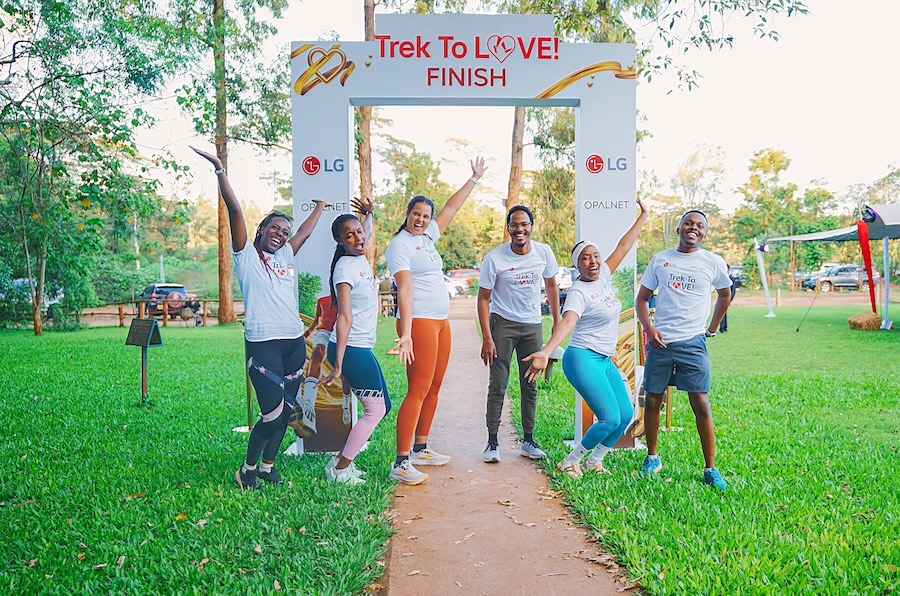
Trek To Love sustainability campaign links everyday living, shared experiences, and resource use through a Karura Forest event in Nairobi
You see it in small moments. Two people cooking together. Friends laughing through a workout. Families sharing travel clips on their phones. These everyday choices shape how energy, water, and resources are used at home, placing sustainability within daily routines. The Trek To Love campaign tapped into that rhythm of everyday life and brought it into the open, ending with a public event at Karura Forest that leaned into human connection rather than polished brand messaging.
LG Electronics East Africa, working with its distributor Opalnet, closed the campaign with a physical meet-up that turned online storytelling into a shared, offline experience. What started as user-generated videos became a live obstacle challenge built around teamwork, communication, and trust. It felt closer to a social experiment than a typical brand activation.
Read also – Green financing is quietly re-shaping Kenya’s economy
At first glance, Trek To Love reads like a lifestyle campaign. It connects to how people use shared spaces, how they engage with each other, and how brands position home living. Events like this reduce the distance between marketing and lived experience. They move away from heavy production and into simpler, lower-impact formats. A forest setting. Human-powered activity. Minimal staging.
There is also a subtle push toward shared living. Appliances like fridges and washing machines sit at the centre of household resource use. When brands tie them to shared experiences instead of individual consumption, it shifts the conversation. It points back to daily habits. How you cook, clean, and live with others shapes your footprint over time.
The Trek To Love campaign began in March with a simple ask. People were invited to submit videos showing how they spend time together. Cooking, dancing, travel, fitness. The entries carried a certain honesty. They were not staged or overly produced. You could tell people were showing up as they are.
That shift matters. Brands often try to manufacture relatability. Here, the participants did the heavy lifting. The campaign leaned on their stories instead of overriding them.
A selected group of participants then travelled to Nairobi for the final event. Karura Forest served as the setting. The choice of location worked. It pulled people out of urban noise and into a space that encouraged interaction.
A Competition Built on Trust and Communication
The obstacle course was designed around collaboration. Teams had to move together, solve challenges, and rely on each other. It tested how well people listen, how quickly they adapt, and how they respond under pressure.
That kind of setup reveals more than a standard competition. You see how people negotiate roles. Who takes the lead. Who supports. Who steps back.
Three teams came out on top:
- Mohammed Omar and Serreti Nannes won a hotel stay and an LG bottom freezer fridge
- Sharon Nduati and Nick Nduati took first runners-up with a 65-inch LG QNED TV
- Monique Abok and Winnie Opiyo placed second runners-up and received an 8kg LG washing machine
The rewards reflected everyday living. Appliances tied directly to home life. That alignment between activity and prize made sense.
Jane Kariuki, Head of Marketing at LG Electronics East Africa, framed the campaign around real-life interaction.
“#TrekToLove was about celebrating real connections in a way that feels fresh, fun and relatable. We wanted to create something that reflects how people connect, grow and share experiences together, and seeing that come to life has been amazing. We also wanted to create something that reflects modern lifestyles, where shared experiences are at the heart of connection. That’s the space where LG exists, as we strive to support those everyday moments with solutions that make life smoother and more enjoyable.”
Rakesh Singh, Managing Director at Opalnet, focused on the response from participants.
“Over the past few weeks, we have seen how powerful it can be when brands create platforms that allow individuals to express themselves and connect in meaningful ways. The stories shared by participants have been inspiring, and they remind us that at the heart of everything we do are human connections. At Opalnet, we are proud to partner with LG on such initiatives that go beyond products and focus on people.”
Both statements point to a shift in how campaigns are being structured. Less focus on product features. More attention on how people live and interact.