Kenya waste driven circular economy enters production systems
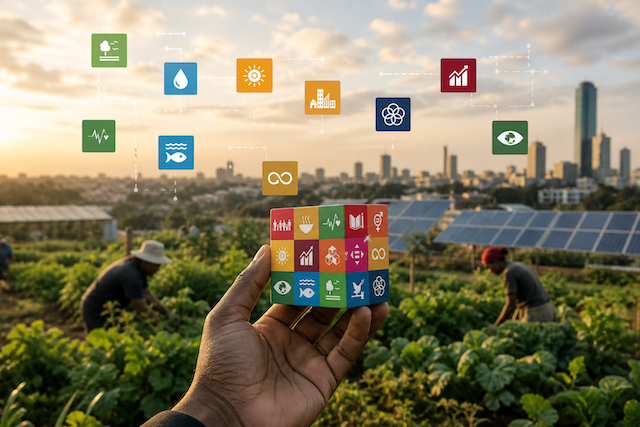
Kenya waste driven circular economy is driving enterprise growth by turning discarded materials into inputs for production systems.
Kenya’s circular economy programme is starting to reframe how waste is treated in the country, with new financing and enterprise support placing it inside the supply chain rather than at the edge of it. The launch of CirculaRising by Absa Kenya Foundation, GIZ and the African Guarantee Fund points to a shift where discarded material is viewed as input for production, not an afterthought in urban systems.
That shift comes at a time when waste volumes continue to rise across Kenya’s cities. Collection systems remain uneven, and much of what is generated still ends up in open dumps or informal recycling channels. The programme sets a target to recycle over 6,000 tonnes of waste while supporting more than 2,000 small businesses operating within circular value chains. You can read that figure in two ways. It marks progress in formalising recycling activity, but it also highlights how early the country still is in building a scaled circular system.
What stands out is how the initiative connects waste to enterprise growth. Instead of treating recycling as a municipal function, it places micro and small businesses at the centre of material recovery and reuse. These businesses will receive training, financing and access to markets through structured tracks that move from microenterprise support to scale-up for larger firms. The model positions waste handlers as producers, which changes how value flows through the economy.
Absa Bank Kenya CEO Abdi Mohamed framed the idea in direct terms during the launch. “For decades, global growth has largely followed a linear model where we take, make, use and discard. While this model has delivered progress, it has also generated enormous waste, placed immense pressure on natural systems, and widened inequality in how opportunity is distributed. The next chapter of growth will belong to economies that create value differently. Economies where waste becomes input, efficiency becomes advantage, and sustainability becomes enterprise.”
Read also – Kenya’s Sustainability Push Looks Good on Paper, but Daily Life Tells a Different Story
That thinking aligns with shifts in global manufacturing and trade. Buyers are placing tighter requirements on how products are made, including how materials are sourced and reused. Kenyan businesses that can integrate recycled inputs into production stand to gain access to these markets, especially in sectors like textiles, packaging and consumer goods. Certification tied to sustainability standards, which the programme plans to support, becomes part of that access.
Kenya waste driven circular economy – Financing as a barrier
Financing remains one of the main barriers. Many small enterprises working in recycling and repair operate informally and lack collateral or credit history. The programme aims to mobilise over EUR 2 million by 2028 to support these businesses, with a focus on women-led enterprises that face the widest gaps in access to funding. That funding may look modest against the scale of the sector, but it signals a move to treat circular businesses as bankable rather than peripheral.
Government backing adds policy weight to the effort. Officials at the launch linked circular economy development to climate action and job creation, placing it within broader economic planning. This alignment matters because waste management in Kenya has often sat between agencies, with limited coordination between environmental goals and industrial policy.
The programme does not resolve the structural gaps on its own. Waste collection, segregation at source and infrastructure for large-scale processing still require investment beyond enterprise support. At the same time, the focus on business-led recycling introduces a different way of thinking about waste. It treats discarded material as a resource that can generate income, jobs and export value when handled within organised systems.
For Kenya, that approach signals an early but deliberate step toward integrating environmental concerns into economic activity. The outcome will depend on how quickly these enterprises move from supported pilots into stable businesses that can operate without programme backing. If that transition holds, waste will begin to show up less in dumpsites and more in production lines.