Beyond the Music: Rethinking the Footprint of Festivals
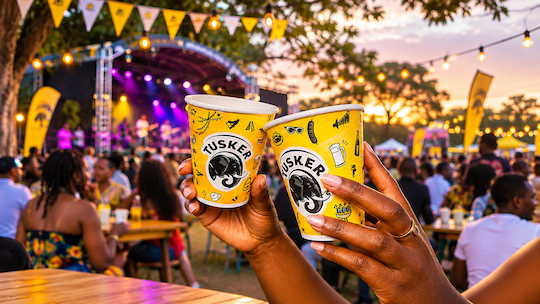
A music festival may last a few hours, but the resources that go into putting it together have a much longer story. From staging and sound equipment to lighting, beverage packaging and temporary installations, live entertainment creates a footprint that extends beyond the final performance.
As Kenya Breweries Limited (KBL), through its flagship brand Tusker, extends its Beer Festival into the festive season, there is an opportunity to look at another dimension of the country’s growing entertainment scene: how touring events can make better use of resources while creating experiences across different communities.
The celebrations, which follow a nationwide month-long beer and music experience, will continue this weekend at Enkang in Kiserian and Nebraska in Ugunja, Siaya. Audiences at the two venues will enjoy performances by Tonny Young and Willy Paul respectively, alongside offers across KBL’s beer portfolio.
The festival will subsequently travel to Nakuru, Mombasa, Nanyuki, Nyeri and Embu, taking its combination of music and entertainment beyond Nairobi.
There is an interesting sustainability question in this model. When an event moves from one town to another, how much of its infrastructure can make the journey too?
Sound systems, lighting equipment, staging materials and event installations are examples of resources that, where designed for repeated use, can support more efficient event production. Rather than building everything from scratch at every destination, organisers can explore ways of extending the useful life of equipment and reducing the materials required for each event.
There is also the question of what happens to beverage packaging after the celebrations. Beer festivals involve the movement and consumption of products in different packaging formats, including glass bottles and cans. Both present opportunities for material recovery when appropriate collection and recycling systems are in place.
For a festival moving across several towns, this could mean thinking about packaging recovery at every stop rather than treating waste management as an afterthought once the music ends.
The local economic dimension is equally interesting. Events in places such as Ugunja, Nanyuki and Embu create opportunities to involve local hospitality businesses, suppliers, transport operators and creative talent. Building these relationships into event planning can help ensure that entertainment spending circulates within host communities.
KBL’s extended festival programme will feature free-entry experiences, live performances and offers across brands including Tusker Lager, Tusker Malt, Tusker Lite, Guinness, WhiteCap, Balozi, Manyatta and Pilsner. The celebrations will continue at Space Next Door in Nakuru on November 14, Big Tree in Mombasa on November 21 and Gawanaz in Nanyuki on November 28, among other destinations.
As live entertainment continues to find audiences beyond major cities, its success can be considered in more ways than attendance and performances. The resources reused, materials recovered and opportunities created for host communities are also part of the story.
The music may stop when the festival ends, but the value of a well-planned event should extend beyond the final song.