Building lasting brands by caring for people and resources.

A brand can spend decades in the market, but staying there takes more than loyal customers. Behind all the products that we love is a network of farmers, suppliers, distributors and retailers.
There is also a production process that depends on water, energy and raw materials. You will find that the most successful businesses treat all these factors with care, knowing that what they use today shapes what they can produce tomorrow.
Kenya Cane celebrates 50 years in the Kenyan market in 2026. Five decades is a long time for any brand, and it is a good moment to ask what it takes to keep growing in a way that the environment and the people around the business can sustain.
Most of the conversation starts at production, since making drinks at a scale as large as Kenya Cane uses a lot of energy and water, and how a manufacturer manages both has a direct effect on the communities nearby.
KBL, the company behind Kenya Cane, has invested in wastewater treatment and recovery at its Kenyan sites, with reported recovery rates of 40 per cent and 65 per cent at two locations. In a country where water is under pressure in many areas, that matters.
KBL has also invested over KShs 850 million in water recovery plants at its Nairobi and Kisumu facilities, collectively capable of recovering 1,968 cubic meters of water daily. Source.
Energy is the other big piece. At its Tusker and Kisumu breweries, the company has put in biomass boilers to replace fossil fuels in the generation of steam. This plays the double role of conserving the environment and empowering local communities, since the biomass is bought from local farmers.
Those farmers are part of a much bigger picture. EABL, KBL’s parent company, reports working with around 60,000 local farmers across its supply chain. Imaging having a steady buyer of produce as a farmer. This makes it easier for you to plan, invest, and support their families. When a large business does well, the ripple effects of this are immense.
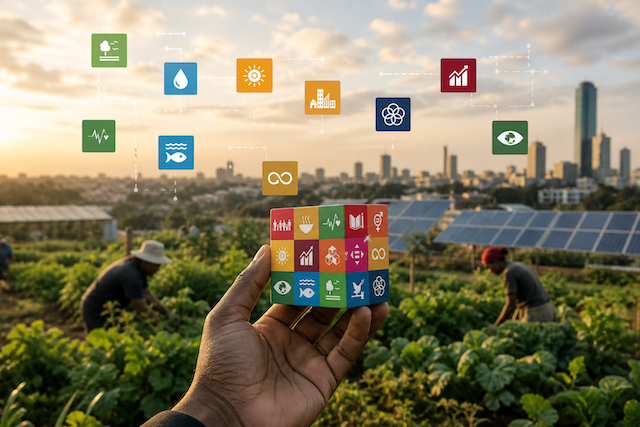
This is exactly what sustainability looks like on ground. It is less about boardroom ideas and more about the everyday choices that decide how much a business takes from its surroundings and how much it gives back.
Kenya Cane’s anniversary is a reminder that lasting long in the market comes with rich long-term relationships with farmers, suppliers, retailers and the towns where the work actually happens. Those relationships go well beyond the shop shelf and into related businesses and communities.
For Kenya Cane and other Kenyan brands looking ahead, the next 50 years will depend on staying relevant to consumers and on taking care of the resources and people that keep the business running. As the Spirit Yetu Idumu theme suggests, lasting means looking after what got you here.