Solar Water Projects Kenya Backed By Britam Foundation
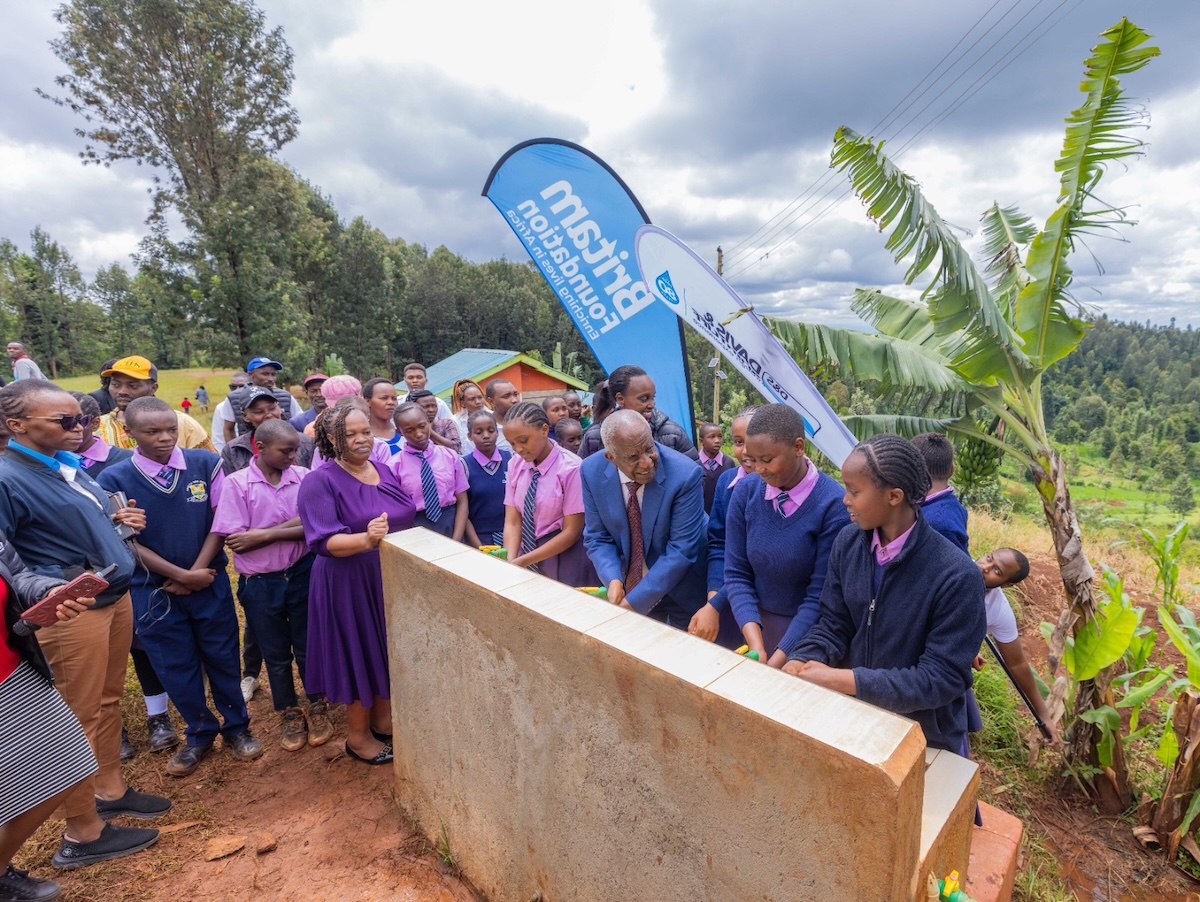
Solar Water Projects Kenya are helping rural schools improve sanitation, lower energy costs, and support uninterrupted learning.
At Theri Primary School in Murang’a County, fetching water had quietly become part of school life.
Students worried about cleaning classrooms. Teachers had to think about sanitation alongside lessons. During dry periods, water shortages affected daily routines in ways many urban schools rarely experience. It is difficult for children to focus fully in class when something as basic as clean water remains uncertain.
That situation recently changed after Britam Foundation, working with Davis & Shirtliff, commissioned a solar-powered water project at the school. A similar project was also handed over at Murang’a School for the Hearing Impaired, where more than 300 learners had been dealing with unreliable water access and expensive electricity costs tied to older pumping systems.
The projects may appear simple on paper. A borehole. Solar panels. Water storage. But inside schools, the impact quickly becomes personal.
At Theri Primary School, head teacher Susan Macharia spoke about how water shortages had been affecting students beyond the classroom.
“This project will go a long way in supporting the education of children. Now that we have access to clean water, we can prevent waterborne diseases such as typhoid and cholera. The learners can also focus on their studies without the worry of going to the river to fetch water to clean their classrooms,” she said.
That last part stands out because it reflects a reality still common in many rural schools across Kenya. Access to water continues to shape attendance, hygiene, health, and concentration.
According to UNICEF, many schools across sub-Saharan Africa still lack reliable water and sanitation facilities, affecting millions of learners every year.
At Murang’a School for the Hearing Impaired, the new system is already changing operational costs as well.
The school’s previous water setup relied heavily on electricity, pushing utility bills higher. Administrators say the new solar-powered system has reduced those costs by nearly 75 percent, freeing up money for other school needs.
Students are also interacting with renewable energy in a direct way instead of only reading about it in textbooks.
“This water project has already cut down our bill by up to 75%, allowing us to save money and use it on other emerging needs. The learners can also see practically how solar energy works as opposed to just seeing it in their books. This is a good initiative for the community because it uses green energy and conserves the environment,” said Mr Mashuria, the head of institution.
Across Kenya, schools are increasingly becoming part of wider conversations around climate pressure, sustainability, and infrastructure gaps. Rising electricity costs and recurring drought periods continue affecting learning institutions, especially in rural counties where resources are already stretched.
Solar Water Projects Kenya – Solar-powered water systems are slowly becoming one practical response to that pressure.
The commissioning events also included tree planting sessions involving students and teachers. In many schools, environmental conservation lessons are now moving outside classrooms and into school compounds, where learners participate directly instead of only studying concepts theoretically.
Britam Foundation says its wider water programme has so far reached more than 90,000 learners and community members across 70 schools in Kenya, Uganda, Tanzania, and Rwanda through solar-powered boreholes and hygiene education.
Speaking during the handover, Britam Foundation Board Chairman Dr Peter Munga said improving learning conditions remains part of the organisation’s wider education focus.
“Education remains one of the most powerful tools for transforming communities. Through initiatives such as this, we want to create an environment where learners can thrive and fully focus on their studies,” he said.
For the students at both Murang’a schools, though, the changes feel much simpler and immediate. Water is available. Classrooms are easier to maintain. Electricity costs have dropped. School routines face fewer disruptions.
Sometimes the biggest difference in education starts with the basics people often overlook.